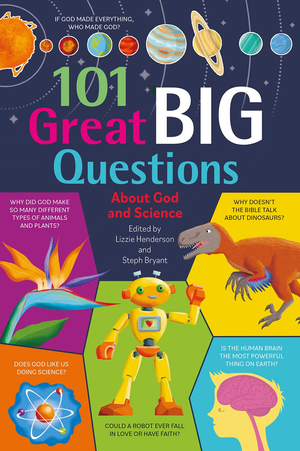
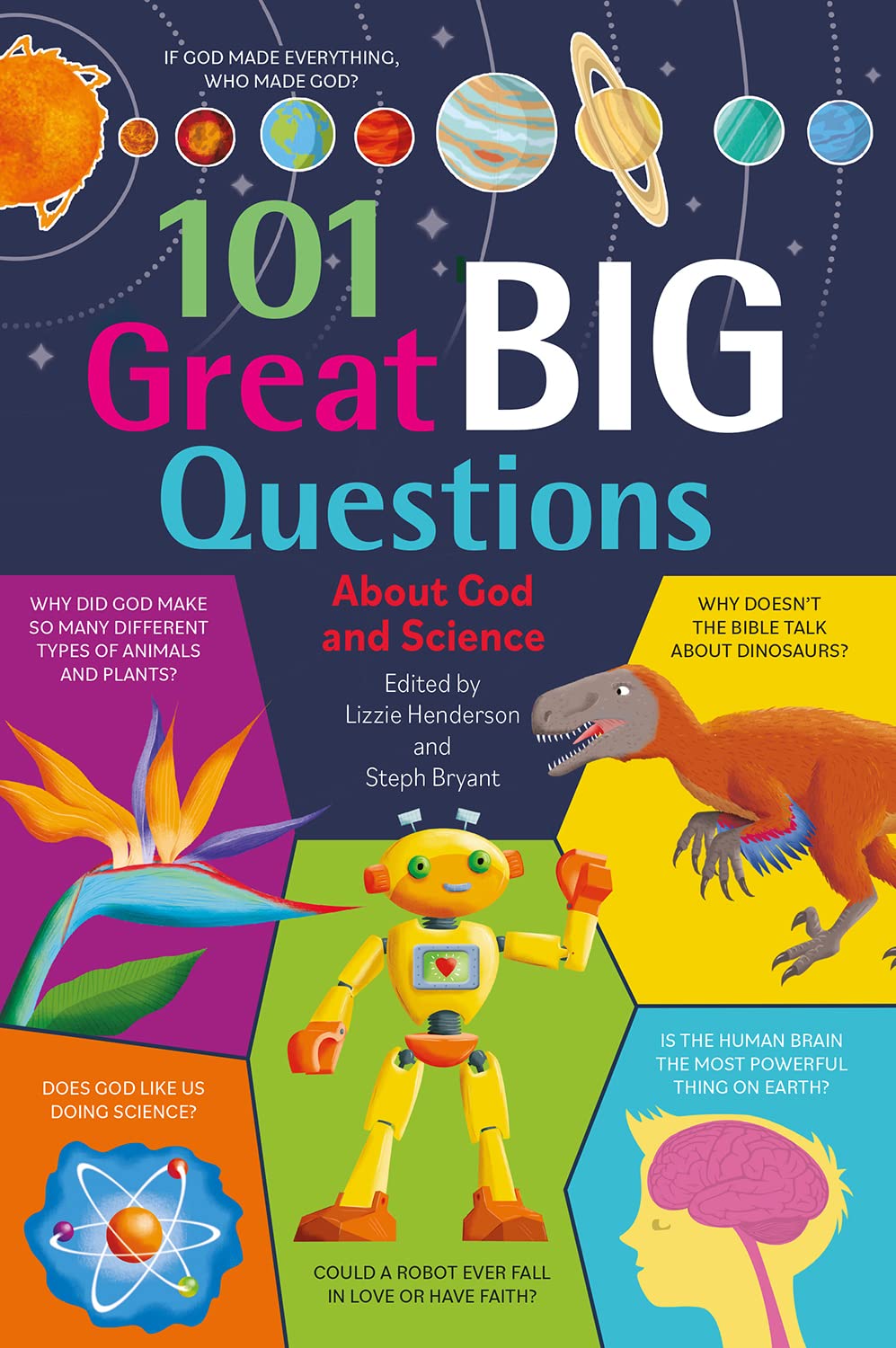
Book Review: 101 Great Big Questions About God and Science

Edited by Lizzie Henderson and Steph Bryant
Published by Lion Hudson, 2022
There is a quiet anxiety that many Christian families feel when their children start asking the hard questions. Where did everything come from? If God made everything, who made God? Does God care about science? These aren’t just innocent curiosities—they are the same questions that have troubled thoughtful believers for centuries.
At Atoms and Adam, we believe that uncertainty is not a threat to faith but an invitation to deeper trust in God. That’s why Lizzie Henderson and Steph Bryant’s “101 Great Big Questions About God and Science” is such a vital resource for parents, teachers, and mentors. This book collects genuine questions from children and pairs them with answers from distinguished Christian scientists, theologians, and philosophers—many from The Faraday Institute for Science and Religion at Cambridge.
Why This Resource Matters
Most Christian books on faith and science are written for adults, assuming the reader has theological training or scientific literacy. This book flips that model. It starts with children’s voices, presenting questions exactly as kids ask them, then lets experts answer honestly without condescension or oversimplification.
As Dr. Ruth M. Bancewicz (Church Engagement Director at The Faraday Institute) notes in her endorsement:
“I am delighted to finally have a book that I can recommend to parents whose children are asking questions that make their heads hurt!”
This is precisely the space where Atoms and Adam exists—a place where big questions are welcomed, not feared. The editors remind readers early on: “Our experts would tell you that [more questions] is a really good thing. Asking questions is one of the things that makes us human.”
Key Themes Across the Book
The 101 questions span eight chapters, covering topics that range from cosmology to ethics, evolution to the nature of God. Here are three pillars that align powerfully with our mission:
1. Science and Faith Are Complementary, Not Competitive
Throughout the book, contributors consistently reject the false choice between accepting science and maintaining biblical faith. Astrophysicist Jennifer Wiseman writes about studying space as “a wonderful gift from God to help us explore some of our big questions about the universe.” Similarly, evolutionary biologist Dr. Sarah Bodbyl Roels explains evolution in accessible terms without treating it as a threat to Scripture.
This mirrors the biblical truth that “The heavens are telling of the glory of God; And the expanse is declaring the work of His hands.” (Psalm 19:1). When we let both the Book of Scripture and the Book of Nature speak for themselves, we find harmony rather than conflict.
2. Uncertainty Is Honesty, Not Weakness
Many answers openly admit what we don’t know. The Revd Prof. David Wilkinson, on the question “Will we ever know exactly how the universe began?”, responds: “Science shows that the universe expanded from a tiny Big Bang… But overall, we still don’t know yet!” He frames this not as failure but as “a mystery to explore.”
This validates the kind of intellectual humility that Scripture commends: “For now we see in a mirror dimly, but then face to face. Now I know in part, but then I will know fully just as I also have been fully known.” (1 Corinthians 13:12). Children learn that it’s okay not to have perfect answers, which is critical for preventing faith crises when they encounter new information later in life.
3. The Bible Is Theological, Not Scientific
On questions like “Is the light mentioned in Genesis the Big Bang?” and “Does the Bible say there was no death when God first made the world?”, contributors handle Scripture with care without forcing it into a scientific textbook role. Dr. Deb Haarsma explains that the creation account focuses on rhythm and purpose—“day and night”—rather than providing a physics lesson.
This distinction protects the authority of Scripture while respecting the integrity of science. As Paul reminds us, God’s “invisible attributes” are “clearly seen, being understood through what has been made, so that they are without excuse.” (Romans 1:20), meaning creation itself is a legitimate source of revelation alongside the written Word.
Who Is This For?
This book serves a unique multi-generational audience:
| Audience | How They Benefit |
|---|---|
| Early Childhood (Ages 2-5) | Parents read aloud to introduce curiosity and wonder |
| Foundations (Ages 6-12) | Kids read independently or with guidance |
| Youth (13-18) | Teens find honest answers to faith doubts |
| Adult & Academic | Parents gain confidence to discuss tough topics |
Testimonials from young readers confirm its effectiveness: “I like how this book shows me how to see science but through God’s eyes” (Fern, aged 10). Another child noted: “I think the questions are interesting and intriguing and I wanted to read more” (Lewis, aged 10).
Connecting to Our Mission
Atoms and Adam exists to help families navigate these exact questions without fear or division. Dr. Henderson and Bryant’s work exemplifies the kind of resource we champion—one that:
- Affirms Core Christian Beliefs: All contributors are Christians who affirm Scripture’s authority while embracing scientific evidence.
- Respects Both Scripture and Science: No chapter forces a choice between the Bible and the Big Bang, evolution, or deep time.
- Values Honest Inquiry: Questions are met with intellectual humility rather than defensive certainty.
- Is Accessible: Written for children but rich enough for scholars, making it ideal for family devotions or classroom discussion.
Read the Full Resource
We highly encourage you to acquire this book for your family library, church education ministry, or school curriculum. It’s available from major retailers, and you can support our work by purchasing it through our affiliate link below:
As an Amazon Associate, Atoms and Adam earns from qualifying purchases made through this link, at no additional cost to you. This does not influence our recommendation—see our Advertising & Disclosure page for details.
It also connects to additional resources at www.faradaykids.com, including activities, videos, and downloadable materials.
This book doesn’t end the conversation—it sparks more of them. And that, as the editors say, is “a really good thing.”