
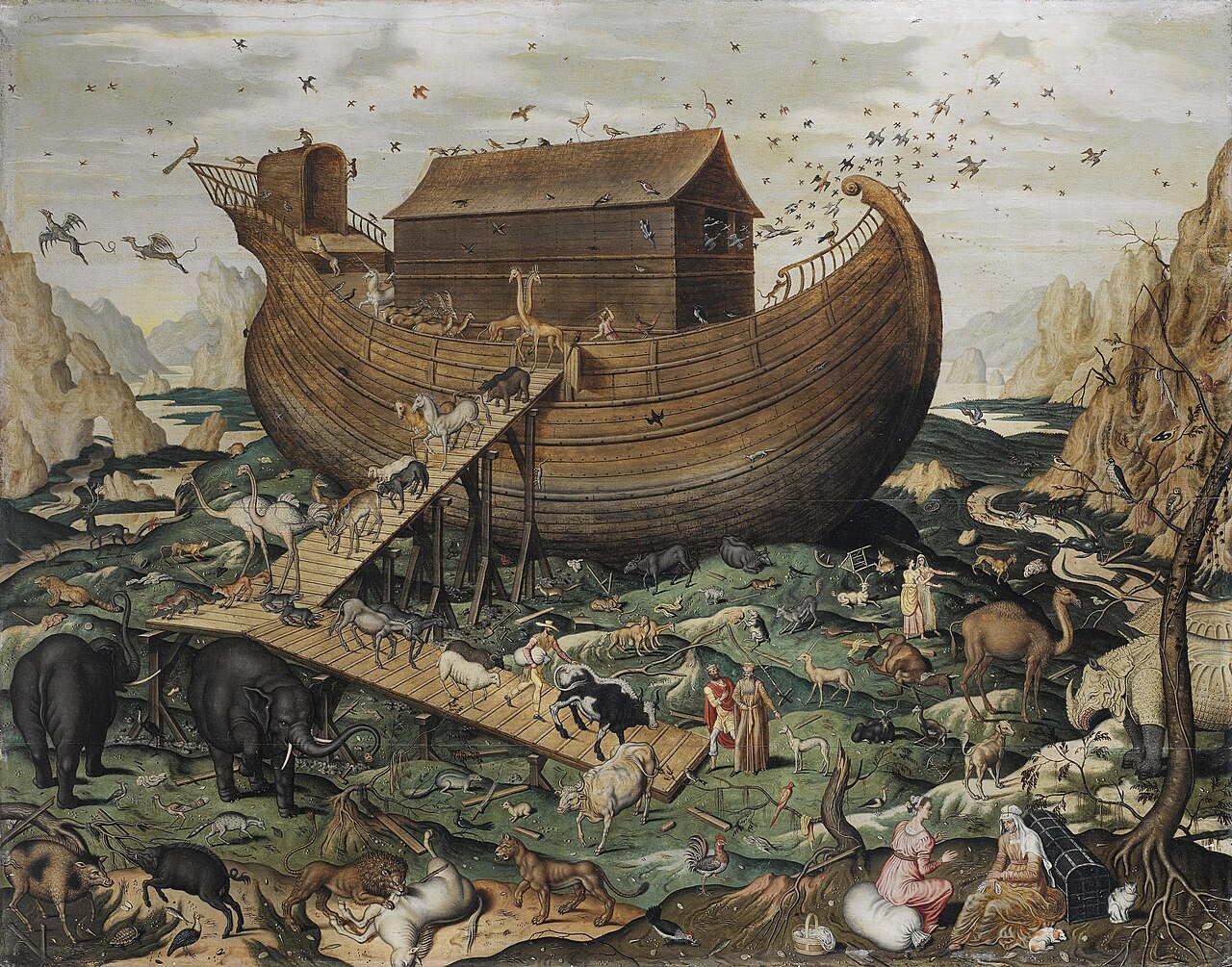
Resource Spotlight: A Christian Physicist Examines Noah’s Flood and Plate Tectonics

By Steven Ball, Ph.D.
Originally published September 2003
Few topics stir the passions of Christians more than the account of Noah’s Flood. For many, it has become a litmus test for biblical fidelity: if you accept modern geology, you must reject the Bible; if you believe the Bible, you must reject the science of plate tectonics. This “either/or” mentality has created a deep divide between the church and the scientific community, often leaving young believers anxious that their faith is fragile when faced with evidence of an ancient Earth.
In his booklet “A Christian Physicist Examines Noah’s Flood and Plate Tectonics,” Dr. Steven Ball challenges this false dichotomy. As a physicist and educator, he argues that we do not need to choose between the truth of Scripture and the testimony of the Earth. Instead, he invites us to read both the “Book of Scripture” and the “Book of Nature” with humility, recognizing that God is the author of both.
At Atoms and Adam, we believe that all truth is God’s truth. Dr. Ball’s work provides a vital resource for parents and teachers who want to explain the geological history of our planet without compromising the authority of Genesis. He demonstrates that accepting the slow, gradual processes of plate tectonics does not negate the historical reality of Noah’s Flood; rather, it requires a more nuanced and faithful interpretation of the biblical text.
Why This Resource Matters
The central tension in this document is the conflict between “Flood Geology” (the idea that a single global flood created all rock layers) and the overwhelming evidence for Plate Tectonics (the slow movement of continents over millions of years). Dr. Ball meticulously dismantles the scientific arguments for a recent global flood while offering a robust, biblically grounded case for a local flood in the Mesopotamian region.
This resource is essential for families navigating questions about:
- Deep Time & Geology: Understanding how mountains, oceans, and fossils formed over eons.
- Hermeneutics: Learning how to interpret ancient Hebrew terms like erets (land/earth) correctly.
- The Fossil Record: Seeing why the fossil layers reflect gradual change rather than a single catastrophic event.
Three Key Insights for Families
1. The Earth Has a Primary Source: Reading the Rocks
Dr. Ball uses a powerful analogy: if you want to know about a person, you ask them directly. Similarly, if we want to know the history of the Earth, we should listen to the Earth itself. The geological record—layered sediments, magnetic stripes on the ocean floor, and the distribution of fossils—is a primary source that tells a story of vast ages and slow processes. To ignore this evidence is to ignore the “voice” of creation. As Romans 1:20 reminds us, “For since the creation of the world His invisible attributes, both His eternal power and divine nature, have been clearly seen, being understood through what has been made, so that they are without excuse.” The Earth’s history is a testament to His patience and design, not a deception.
2. Reinterpreting “All the Earth” (Erets)
One of the biggest hurdles for believers is the phrase “all the earth” in Genesis 6-9. Dr. Ball explores the Hebrew word erets, which can mean “earth,” “land,” “country,” or “region.” He points out that Scripture frequently uses “all the earth” to refer to a known region (e.g., the famine in Joseph’s time affected “all the earth,” meaning the known Near East, not the Americas or Australia). By understanding the ancient Hebrew mindset, we see that the Bible does not explicitly demand a global flood covering every mountain on the planet. The clues in the text—such as the ark resting on the “mountains of Ararat” (a region, not a specific peak) and the wind subsiding the waters—point to a massive, catastrophic local flood in the Tigris-Euphrates basin, sufficient to destroy the wicked humanity of that time without requiring a miracle of global hydrology.
3. Plate Tectonics: The “Spreading Out” of the Earth
While the flood was a localized judgment, the formation of the continents is a global process. Dr. Ball highlights how the Bible repeatedly describes God “spreading out the earth” (e.g., Isaiah 42:5, Psalm 136:6). This language aligns remarkably well with the scientific theory of plate tectonics, where the Earth’s crust is divided into plates that slowly drift, collide, and spread over millions of years. This process is responsible for mountain building, the formation of continents, and the recycling of carbon dioxide that keeps our planet habitable. Far from contradicting Scripture, the slow, majestic movement of the Earth’s plates reveals a God who meticulously prepared an “oasis” for life over deep time.
A Path Forward for Faith and Reason
Dr. Ball warns against “Flood Geology,” which attempts to force the geological record into a 6,000-year timeline. He argues that this approach not only lacks scientific support but also misrepresents the character of God, who leaves us a trustworthy physical record. Instead, he encourages a view where the Flood is a real, historical event of judgment and grace, and Plate Tectonics is the slow, divinely ordained mechanism by which God shaped the Earth for our habitation.
“The God of the Bible is not a deceptive God. Rather, He has left us not only a scriptural record of the past, but also a trustworthy physical record of the past. It can be shown that these records do not conflict with one another.”
For parents and teachers, this booklet is a tool to free the next generation from the fear that science will destroy their faith. It validates the scientific method as a way to uncover God’s glory while affirming the sufficiency of Scripture for salvation and spiritual truth.
Read the Full Resource
We highly encourage you to read Dr. Ball’s full text. It is written with clarity, humility, and a deep love for the God who laid the foundations of the Earth.
https://www.letu.edu/academics/arts-and-sciences/files/plate-tectonics.pdf